
Charting your project
With three children, Stefan and Karin stepped away from everyday life and made a catamaran their home for a full year. They chose a long-term charter so they could live the adventure to the very end, without turning their final months into a boat-resale project.
Some adventures begin with a precise plan. The Baumann family’s began almost as a joke over drinks: what if they sold everything and sailed away? Two years later, Stefan, Karin and their three children were flying to Tahiti to spend a full year living aboard an Excess 11.
Asked to sum up that year in a single word, Stefan chooses one: “Magical.”
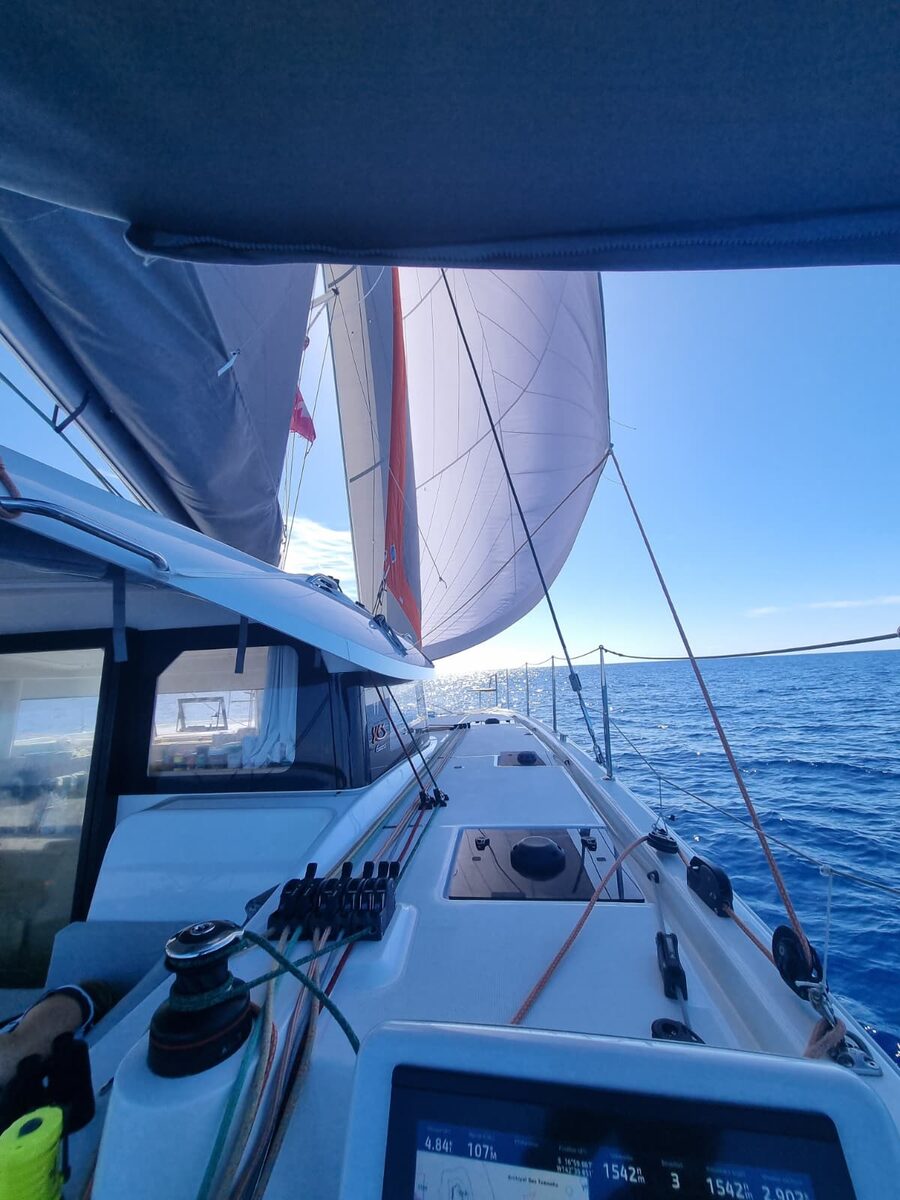
Sailing has been part of Stefan’s life for as long as he can remember. He was three when his parents bought their first boat on Lake Geneva. They later moved the family boat to the Mediterranean, giving him his first experience at sea and a lasting appetite for life on the water.
The idea of taking a year away to sail did not begin with a carefully organised timeline. At first it was a playful suggestion shared with friends. When Stefan brought it to Karin, she did not hesitate.
“At first, it was almost a joke over drinks. Then Karin said yes straight away.”
They gave themselves two years to leave. That window reflected a very practical concern: finding the right moment in their children’s lives while arranging school, housing, work and everything else a family must set aside before changing course.
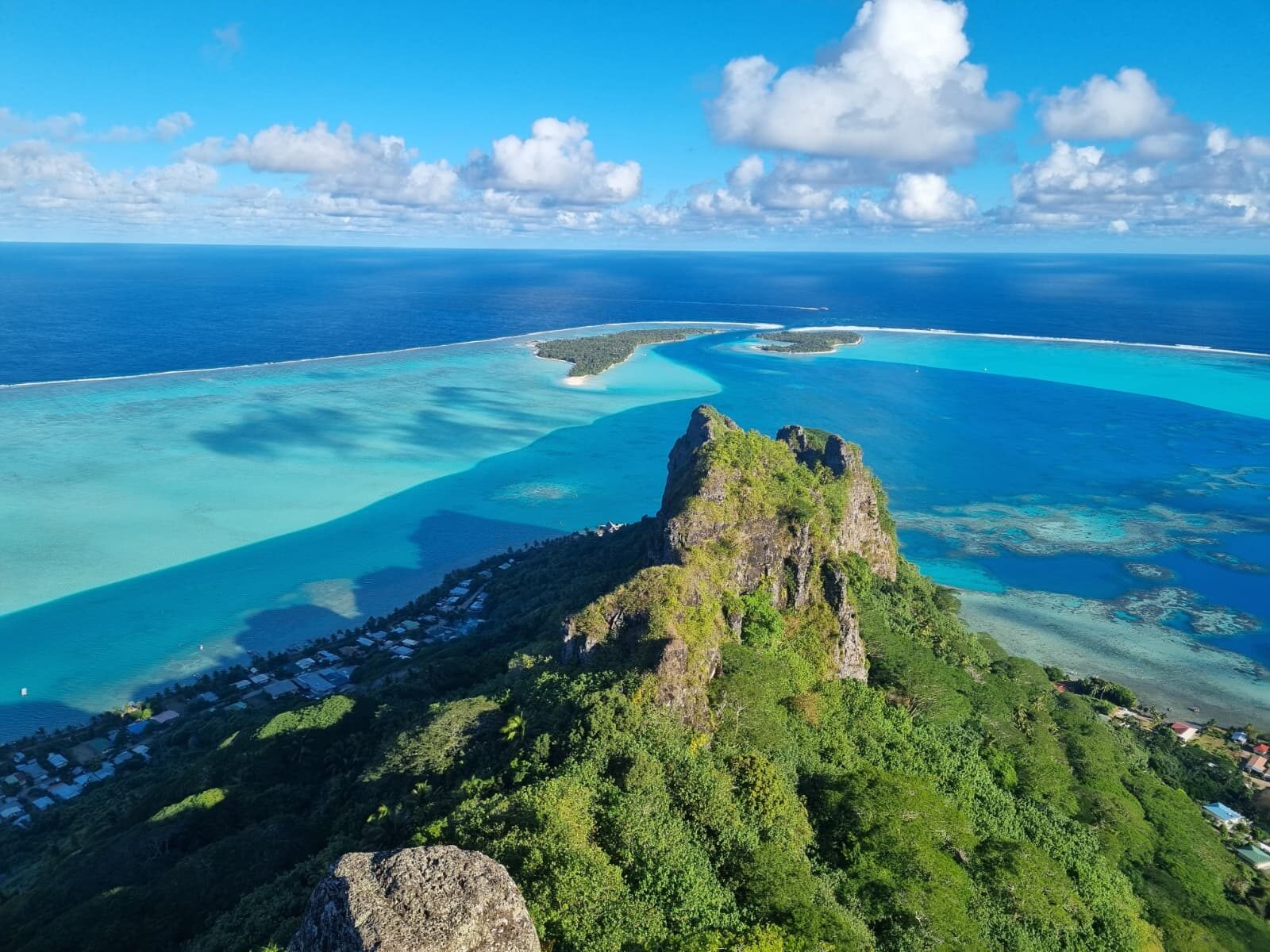
A circumnavigation, the Caribbean and the Mediterranean all entered the conversation. For a journey limited to one year, however, French Polynesia gradually stood out. It offered a vast cruising ground, remarkable variety and the chance to build a real itinerary without spending the whole year chasing miles. Polynesia had always been the daydream — it would have been their honeymoon, had that trip ever happened.
During their research, Stefan and Karin discovered the Sail Tahiti website independently, within minutes of each other. They had both found the same practical resource: clear information about cruising French Polynesia, and what a family could realistically experience there in a year.
A catamaran was the natural choice. With three children, space, stability and the ability for everyone to find a corner of their own mattered as much as the boat’s sailing qualities. They were not simply choosing a boat to sail. They were choosing a home for five people.
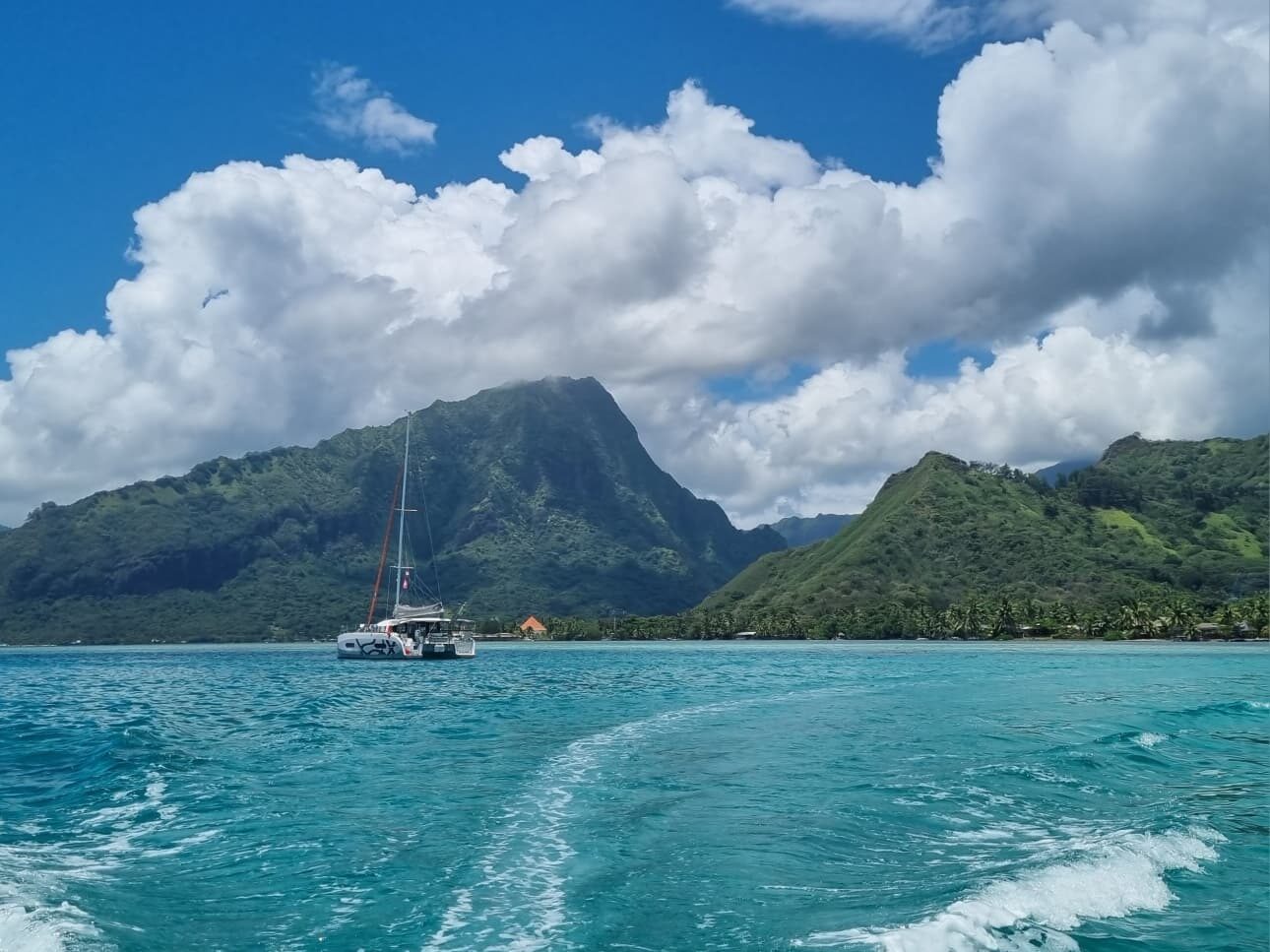
Like many families planning an extended voyage, Stefan and Karin seriously considered buying. On paper, ownership can look straightforward: purchase the boat, cruise, then sell it. In practice the calculation includes far more than the purchase and resale prices — maintenance, insurance, technical surprises, paperwork, and above all the time it takes to sell at the right moment.
For the Baumanns, the end of the journey became the deciding factor. Buying would have meant spending the final weeks, perhaps the final months, preparing the boat for sale, meeting buyers, negotiating and living with an uncertain timetable. A long-term charter gave them a defined commitment, the freedom to enjoy the year to its final day, and a boat to hand back on an agreed date.
“We didn’t want to spend the final months trying to sell the boat. We wanted to enjoy the journey right to the end.”
At the time this was not a standard arrangement. David at Sail Tahiti was mainly offering shorter charters, of around three months, but the conversation led to a formula built around the family’s full-year project. Signing the agreement was the turning point: the dream now had a date, a commitment and a real departure.
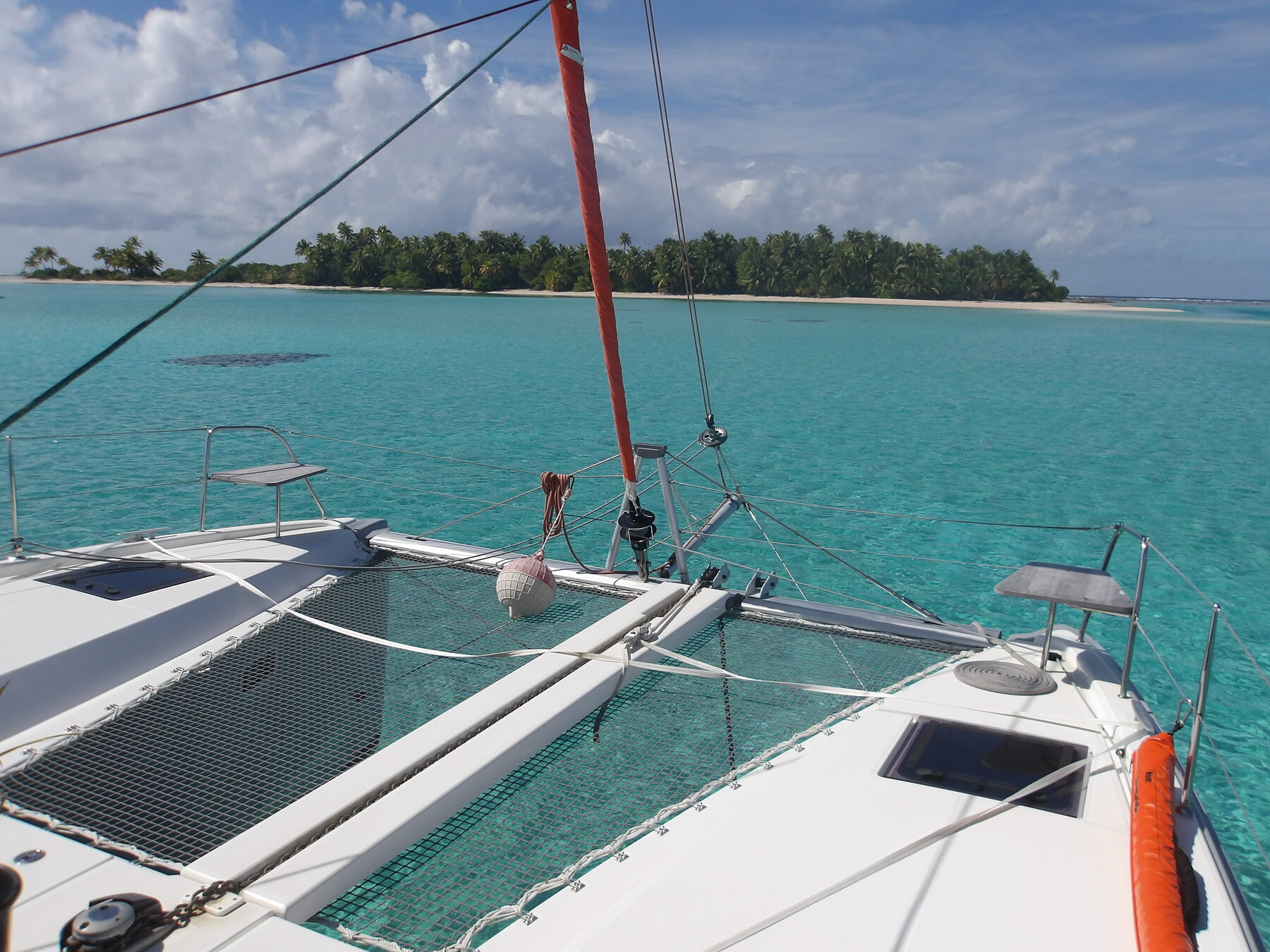
As the date approached, the family began shrinking everyday life. Ski clothes and everything they would not need for a year went to friends and relatives. Belongings were sorted, stored or left behind. Two months before departure they put the house up for furnished rental to help fund the voyage; a month before leaving, it found a tenant.
The children were not immediately convinced, the eldest least of all. Leaving meant saying goodbye to family, friends, school and home. Their reluctance was as real as their parents’ excitement. A promise was made: one year, then home, whatever happened. That was one of the quiet advantages of chartering — the end date was known from the start. Once the journey began, they took to the new life quickly and came to love their extraordinary year afloat.
For Stefan, the stress did not truly lift until they boarded the plane. Until then there was always one more problem to anticipate. That mixture of excitement and worry may be the most universal truth about a big departure: almost nobody feels completely ready until they have actually gone.
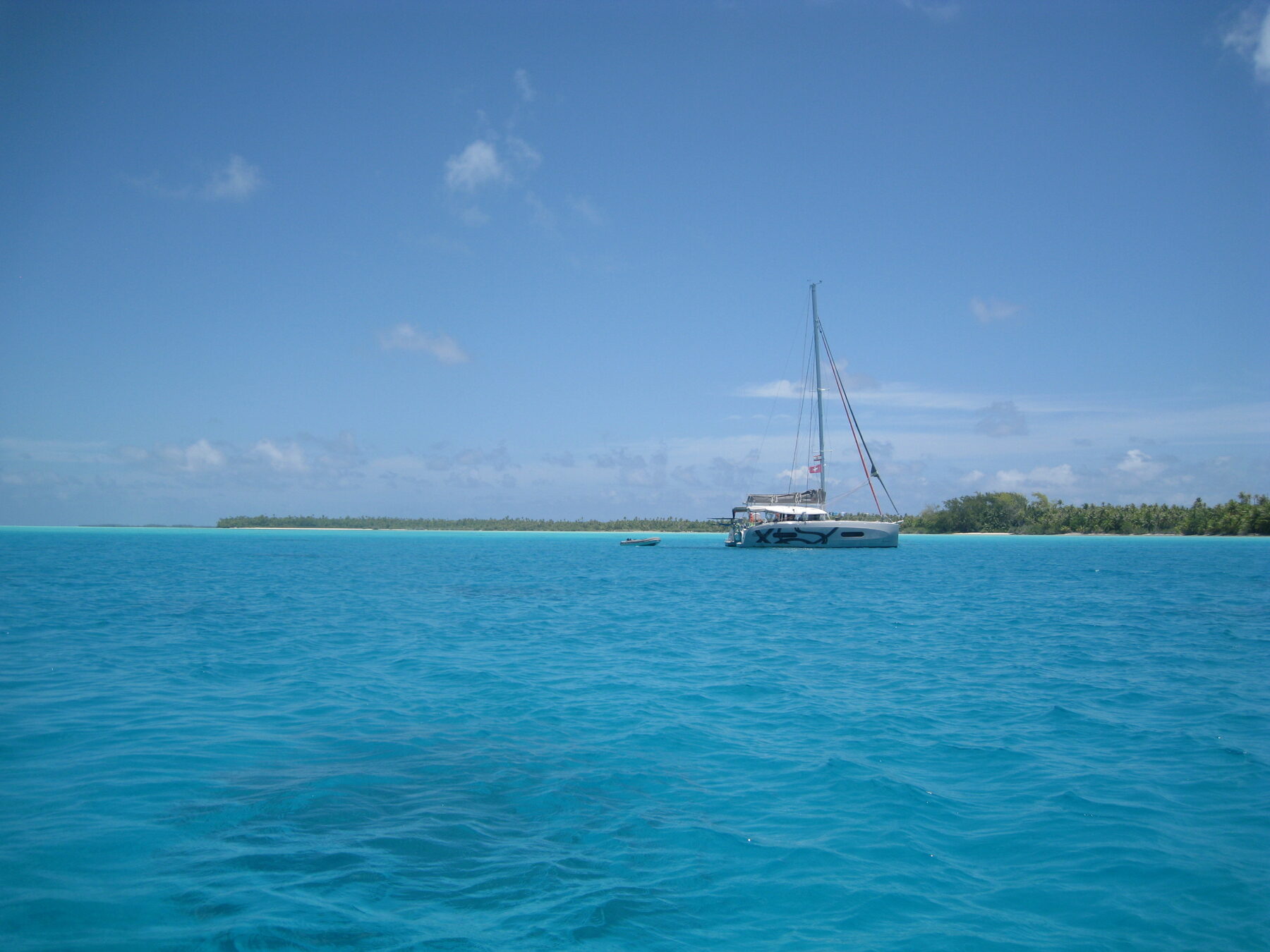
The first week in Tahiti went on taking over the boat, with two training sessions to learn its systems and build the right habits. That early support made everything that followed feel calmer.
It then took about a month to find their rhythm. Shopping, cooking, stowing, anticipating needs and organising life for five all demand a different logic afloat. The family realised quickly that they were not on holiday: the boat was their home, and a home needs structure, routine and a clear division of labour — all the more so once school restarted, with Stefan teaching the children in the morning while Karin worked.
“We quickly realised that we were not on vacation. The boat was our home.”
The paradox is that the smaller space also made daily life simpler. With fewer possessions, everything had a place and was easier to find. A more compact life is not necessarily a more complicated one; it simply asks you to be more intentional.
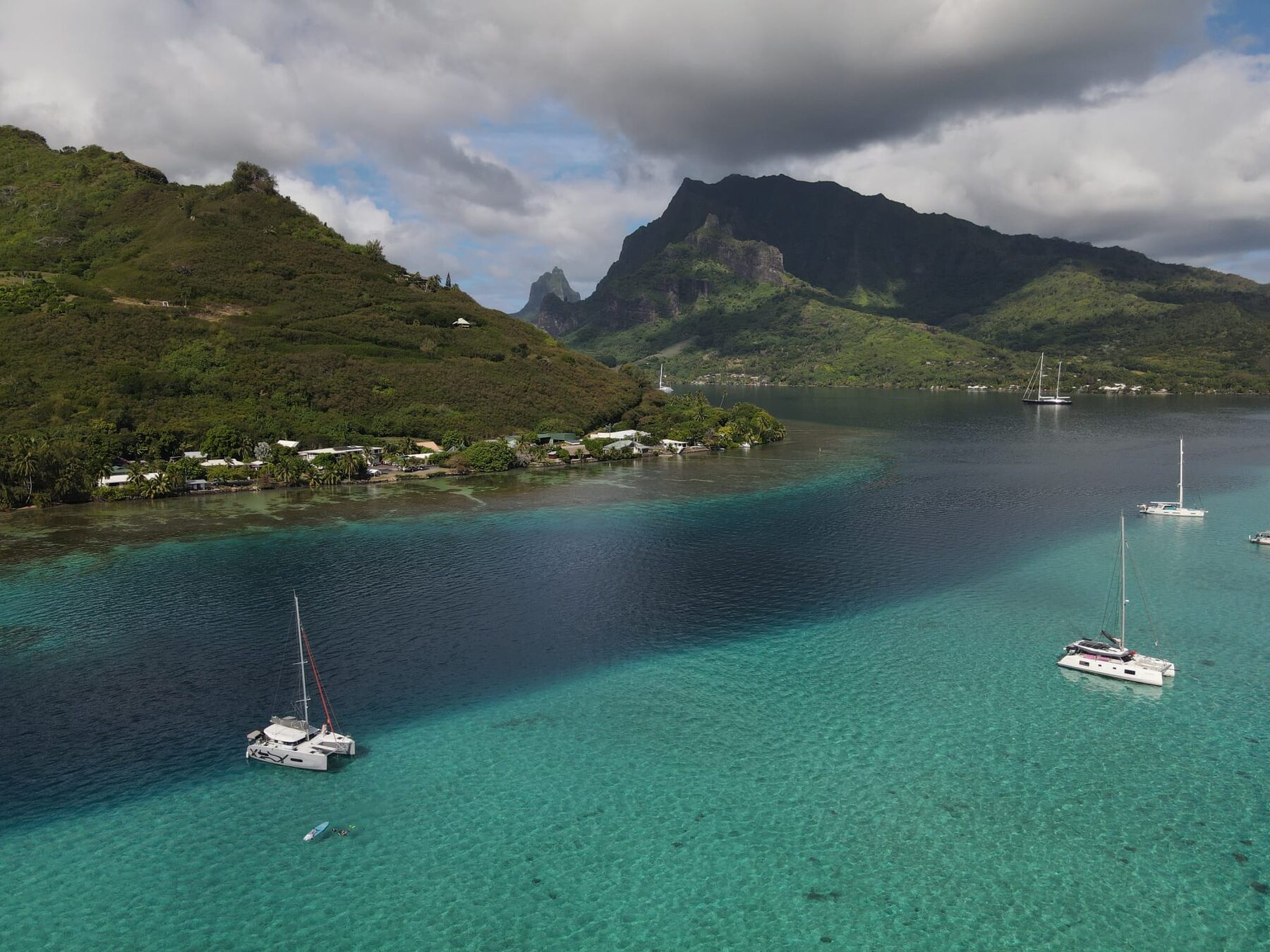
Their boat was recent and had already crossed the Atlantic and then the Pacific to reach Polynesia. As with any new boat entering its first sustained period of use, small adjustments and early niggles could surface. Across the full year, though, the Excess 11 proved reliable, with only minor technical problems.
For Stefan the size suited the project: enough room to live as five, while remaining a boat the family could handle themselves. For a year, the balance of volume, simplicity and budget was right.
With hindsight he recognises how much one extra metre changes life aboard. A bigger fridge and freezer, a dishwasher or a washing machine would have added comfort. Those wishes do not call the choice of boat into question — they simply show how priorities shift when a catamaran becomes a full-time home.
Chartering gave them more than access to a boat. It came with a team that knew both the boat and the cruising ground. That presence mattered most during a tsunami warning: in a moment that could easily have become frightening, the Sail Tahiti team could inform, reassure and put things in proportion.
For sailors far from their usual points of reference, that peace of mind is hard to put into a financial comparison. It removes neither the skipper’s responsibility nor the realities of cruising, but it means you are not alone with every question.
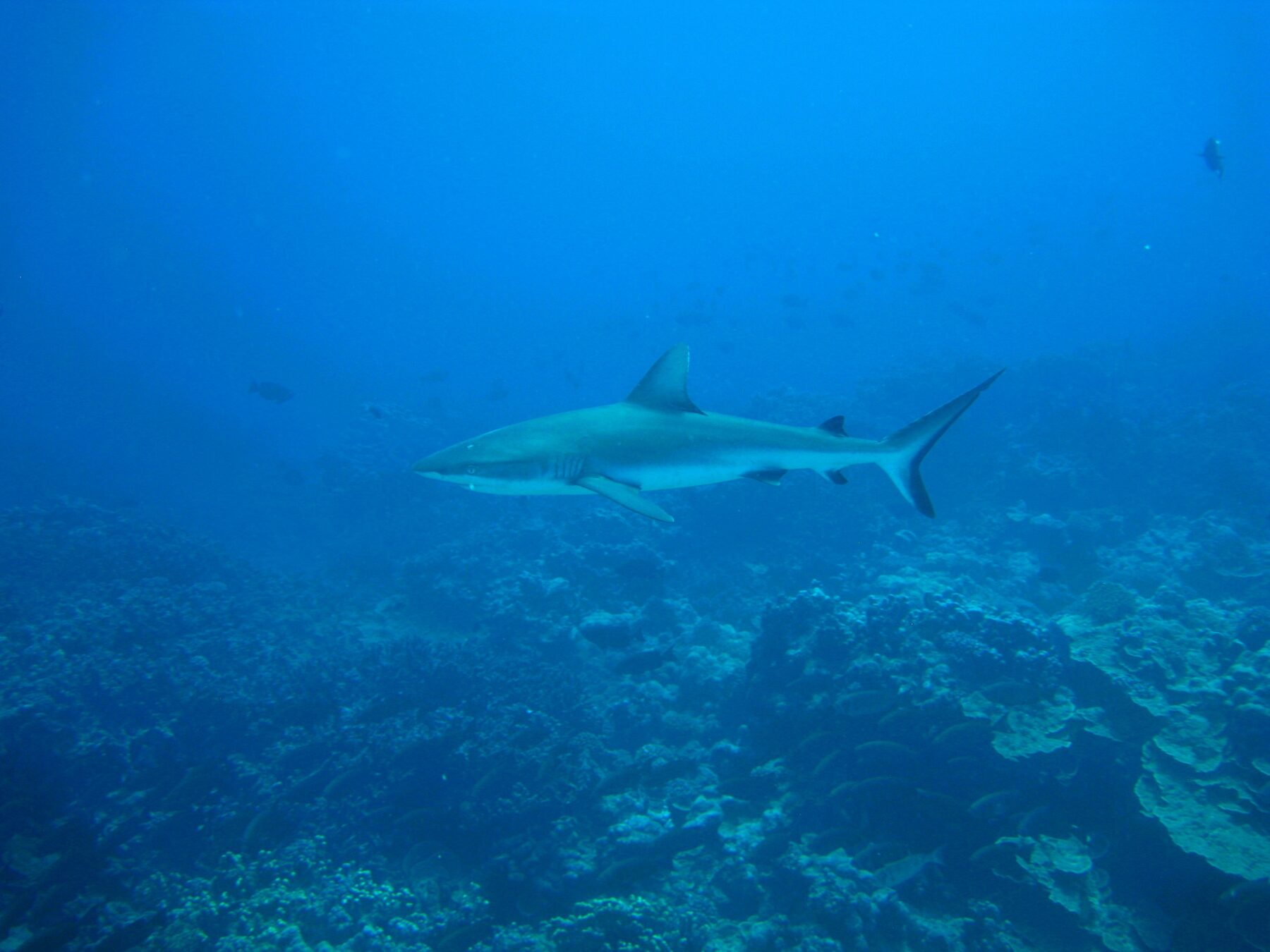
Over the months the Excess 11 became far more than transport. It was a mobile home that carried the family from one anchorage to the next, close to reefs and places that would have been difficult to reach any other way.
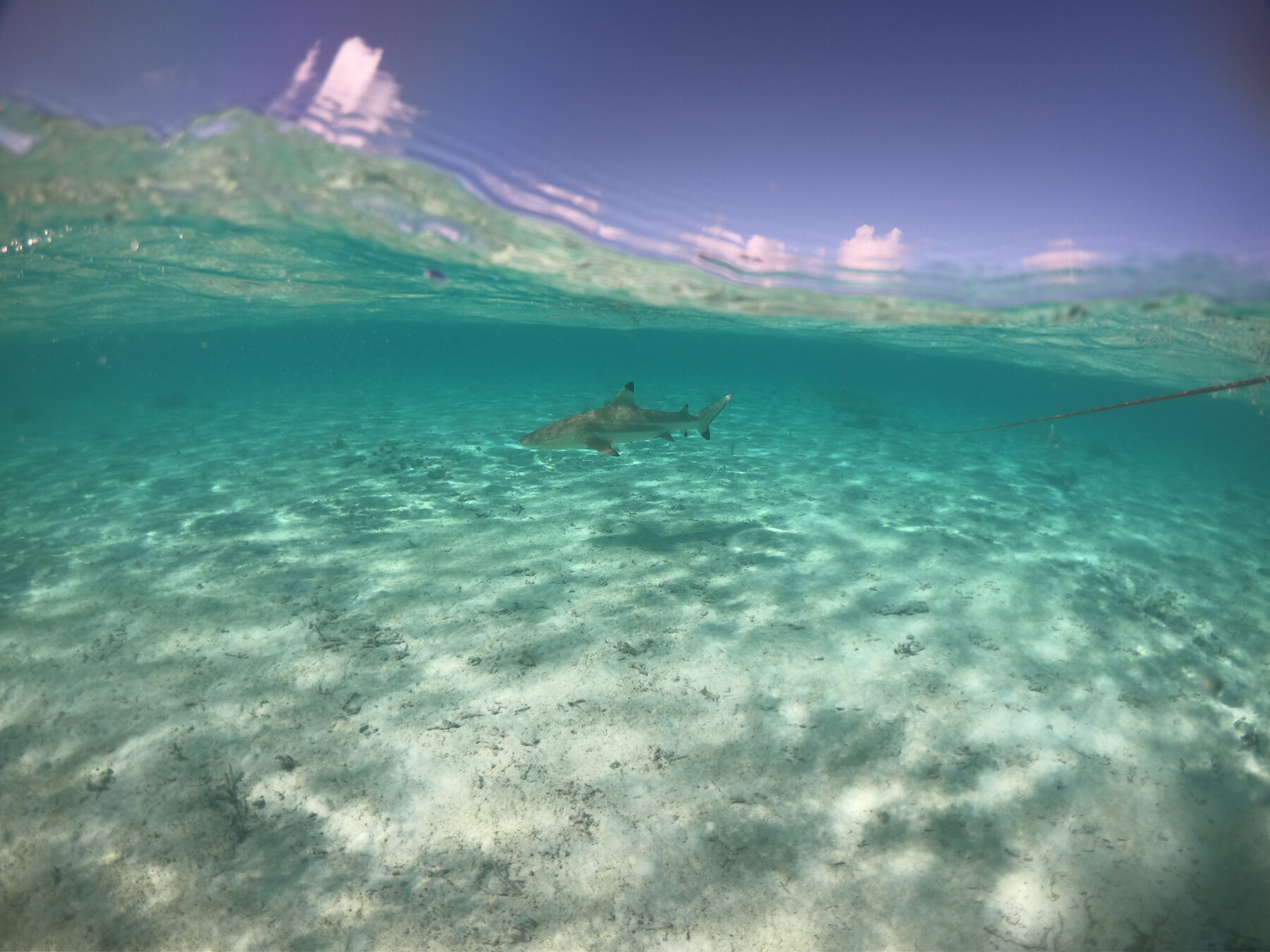
Stefan’s memories are full of sharks and fish gathering around the boat. Fascinated by sharks, he spent day after day in the warm water with his family, and even went on a night dive to watch them hunting — an experience he still describes as magnificent.
He also holds on to a simpler, almost abstract image: open ocean, blue water in every direction and nothing at all on the horizon. After months of moving between islands, that sense of immensity remains one of the year’s strongest memories.

The adventure did not require the family to master every detail before departure. They learned on the way: how to provision, how to run daily life, how to adapt old habits and how to share a smaller space. Preparation mattered, but it could never replace experience.
If Stefan could speak to the man he was on departure day, his advice would be very simple: everything will be all right. Not because there will be no difficulties, but because a family can adapt, learn and find its balance faster than it imagines.
“Everything will be all right.”
For a comparable project — a year in French Polynesia with a clearly defined return date — Stefan would choose a long-term charter again. The freedom to enjoy the voyage until its final day, with no heavy maintenance and no resale to organise, remains decisive.
For a longer or very different expedition, the answer might change. Stefan is drawn to colder regions such as Patagonia or the Arctic, which would call for an aluminium boat and very specific preparation. Ownership makes more sense when a boat has to be deeply customised, kept for several years, or used for a highly personal programme.
That may be the most useful lesson of their experience: there is no universal answer to buying versus chartering. The right choice depends on the duration, the destination, how much customisation you need and how you want the journey to end. For the Baumann family, on one year in Polynesia, chartering the Excess 11 made the adventure possible without weighing down its final chapter.
At the beginning there was an idea shared over drinks, three children in no hurry to leave what they knew, and parents still imagining everything that could go wrong. At the end there is a family who lived for a year to the rhythm of islands, passages, reefs and a floating home that had become familiar.
Asked to describe it in one word, Stefan chooses “magical”. It is a short word, but it holds the whole thing: the nerves of departure, the adjustments of the first month, the beauty of the open ocean, and the satisfaction of turning a joke into a family memory for life.
Sail Tahiti helps families choose the right boat, prepare the project and discover French Polynesia. Long-term charter or ownership — the point is to find the answer that actually matches your timeframe, your crew and the way you want to travel.
Photographs by the Baumann family, aboard their Excess 11.
A guest story from Brent and Ana, South African / Flemish sailors aboard SV Impi, a Lagoon 440, who crossed to French Polynesia on their second circumnavigation. Follow their voyage on Facebook @cat.impi. A little about us: we’re Brent and Ana, South African /
You are approaching the end of your career and wondering how to make the most of the years ahead. Retirement cruising in Polynesia may be your ideal solution for living freely, independently, and in an exceptional environment.
Imagine leaving everyday life behind and setting sail into one of the most beautiful corners of the planet - with your entire family. That's exactly what Anne-Victoire and her husband did when they set off from Bordeaux in their 11-metre catamaran with their four children.
Five archipelagos, 118 islands and enough lagoons to cruise for years without anchoring twice in the same place. Every boat we sell, rent and look after is there to help you enjoy them.
A few emails a year: boats arriving in Polynesia, brokerage listings before they go public, passage notes and news of the season.
We use cookies that make this site work and, only if you agree, cookies that show us which boats and pages are viewed, so we can improve the site. You can refuse and still use the whole site. Privacy policy